NAPABA Sidebar - May 2020
/

NAPABA Sidebar


The coronavirus pandemic has affected every person who is reading this. We're staying inside except for a quick trip to the grocery store. Some of us are worried about our jobs or how strangers will treat us based on our race or ethnicity. NAPABA contacted several presidents of our affiliate organizations to learn how they’re finding solutions amid today’s challenges.

What has been your biggest challenge leading your affiliate over the past two months?
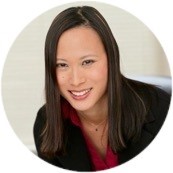
The biggest challenge has been having to cancel some of our membership activities and recalibrate how we may still be able to connect with our membership virtually and be a resource for our membership and local APA community.

Serin Ngai, President, Asian Bar Association of Washington

We are living in unprecedented times. The biggest challenge for me is to keep our members engaged during the lockdown. Our membership growth and fundraising traditionally depended on attendance at in-person networking events.

Gary Zhao, President, Asian American Bar Association of Greater Chicago

I am sure that we are not alone, but going virtual has been a tremendous challenge. AABANY usually maintains a very busy calendar as we either host or sponsor at least one or two events per week. We suddenly had to reschedule events and shift to a virtual platform. In addition, my term ended on March 31, and we turn over our leadership team – including our Officers, Board, and Committee Chairs – on April 1. While we have many returning leaders, we have the added challenge of orienting and integrating new leadership at a time where we cannot meet in person.

Brian Song, Immediate Past President, Asian American Bar Association of New York

We have two big challenges relating to the pandemic. One challenge is staying connected with our members without being able to meet in person. We meet about once a month as a membership to have lunch and discuss the organization’s business and action items, but we canceled our early April meeting to do our part to help flatten the curve. Our other big challenge is keeping the momentum going with respect to the planning of this year’s NAPABA regional conference, which we are hosting and is currently scheduled to be in Charlotte from September 11-12, 2020.

Marla Reschly, President, Charlotte Asian Pacific American Bar Association

Making the decision about whether to postpone our annual installation dinner, which was originally scheduled for March 20. It was truly an agonizing process, made more complicated by stressful negotiations with our venue about whether we could even postpone without penalty, before it was clear that we could invoke our contract's force majeure clause. Early March was right before California/Los Angeles decided to implement social distancing and stay at home orders. The APABA-LA Board Executive Committee definitely saw the tide turn very quickly on how serious the COVID-19 public health crisis was, and we went from not postponing to postponing in the span of about 48-72 hours.

Christina Yang, President, Asian Pacific American Bar Association of Los Angeles County

How have you and your members managed to stay connected during the outbreak?

We have been continuing our virtual presence with our membership including continuing our monthly e-newsletter, ensuring our website is more routinely updated and exploring future ways to engage virtually.

Serin Ngai, President, Asian Bar Association of Washington

We hosted regular virtual video meetings to help members stay connected. For example, in early April, AABA Chicago held a virtual fundraiser to support distressed local Asian American restaurants and frontline health care workers. We raised enough money to purchase 120 individual meals from a local distressed Asian restaurant. We then donated those meals to health care workers at Rush University Medical Center, one of the hospitals in Chicago combating COVID-19. We had a great turnout for the fundraiser. We are also hosting virtual career panels to help law students by providing them with career advice during this tough job market.

Gary Zhao, President, Asian American Bar Association of Greater Chicago

We’ve continued to have robust communications through email and social media. We will be heavily relying on our Committee Chairs to stay connected and engaged with their members. We held our first Virtual Mixer on April 1, which was quite successful. On the heels of that event, our Membership Committee is implementing a weekly virtual happy hour for members to stay connected, starting on April 24.

Brian Song, Immediate Past President, Asian American Bar Association of New York

Like many others, we have stayed connected through the magic of technology. Our annual meeting to elect our board of directors is scheduled for May and that meeting will be a teleconference with the option for members to vote by proxy. Later in May, we will have our annual board of directors meeting where our board will elect the officers for the next year, and that meeting will be hosted either through Zoom or WebEx.

Marla Reschly, President, Charlotte Asian Pacific American Bar Association

We have held virtual events such as a recent very successful free estate planning webinar geared towards front-line first responders. We've had Zoom board meetings in lieu of in-person ones as well, and it's been nice to "see" everyone via video conference.

Christina Yang, President, Asian Pacific American Bar Association of Los Angeles County

What has the climate been in your local legal community? Your local APA community?

The local APA community has been concerned with anti-Asian sentiment, attacks, and hate crimes. The International District in Seattle has particularly been hit with white nationalist propaganda, and there have been reports of assaults and property crime on Asian Americans and APA-owned businesses.

Serin Ngai, President, Asian Bar Association of Washington

Sadly we have seen a dramatic rise in racism and xenophobia against Asian Americans in our community due to the COVID-19 pandemic. Many of our APA bar leaders and/or their immediate family members have experienced racism as a result of the toxic political rhetoric and misinformation related to COVID-19. Small Asian-owned local businesses were also negatively impacted long before the lockdown. We are doing everything we can to support these businesses, including our virtual fundraiser.

Gary Zhao, President, Asian American Bar Association of Greater Chicago

We are in New York City, and of course many people are scared for themselves, their families and their friends. We have also unfortunately seen a sharp increase in anti-Asian discrimination and violence. AABANY has participated in many efforts to engage and support our community including:

  • Compiling and publishing on our website listings of COVID-19 resources on numerous topics that are vital and critical to Asian Americans, including immigration, housing and how to combat anti-Asian harassment and violence
  • Joining with national organizations, including NAPABA, to condemn COVID-19 related anti-Asian violence and xenophobia
  • Supporting Asian students in their effort to challenge unreasonable forced eviction from International House
  • Staying engaged and informed through various meetings convened by government offices and elected officials on COVID-19 related anti-Asian racism and attacks
  • Educating the public on combating anti-Asian violence by participating in webinars on the subject
  • Partnering with prominent law firms on projects to advocate for and support members of the Asian American community who may be adversely affected by COVID-19
  • Our new president, Sapna Palla, issued a letter to our members more fully detailing our recent efforts: 

Brian Song, Immediate Past President, Asian American Bar Association of New York

Probably similar to other Southern cities of our size with respect to both of those questions. We have a robust local APA community in Charlotte, and together with community support, we will weather through this pandemic and its consequences, whatever they may be.

Marla Reschly, President, Charlotte Asian Pacific American Bar Association

Now that most people have been working from home for the past 6+ weeks, we're all adjusting more to the "new normal." Zoom calls and kids/pets in the background are all to be expected, and I think folks are also adjusting to the idea that for those with children at home, work hours have had to shift to outside of regular business hours more than usual. I like to think that everyone is extending more grace than usual to each other during these times, both professionally and personally.

Christina Yang, President, Asian Pacific American Bar Association of Los Angeles County

What positives have you been able to find during the lockdown?

It has been very heartwarming to witness how many people care about each other and their community, and want to assist and support others.

 Serin Ngai, President, Asian Bar Association of Washington

The lockdown gave us more time to advocate for the Asian American community negatively impacted by the COVID-19 related racism. The rise in racism, xenophobia and hate crimes against Asian Americans made us more united than ever before. AABA, along with five other sister APA bar associations in Chicago, recently outreached to the Illinois Attorney General, Cook County State’s Attorney and U.S. Attorney’s office in Chicago asking each law enforcement agency to take action to combat hate crimes. Our united bars got tremendous support and cooperation from each law enforcement agency. We are working with these agencies, including organizing a virtual Town Hall meeting in conjunction with Asian American Heritage Month, to encourage more reporting of hate crimes from our community members.

Gary Zhao, President, Asian American Bar Association of Greater Chicago

On a personal level, I’ve been able to spend a lot more time with my family and have dinner with them every night.

Brian Song, Immediate Past President, Asian American Bar Association of New York

The obvious positive is spending more time with my kids. They are usually in daycare all day, five days a week. Being at home has given me a glimpse of what I miss when I am not with them during the week. I have played more hopscotch and hide-and-seek and watched more cartoons in the last three weeks than I have in the last 20 years. The other big positive of the lockdown is not having to commute and be stuck in traffic every day.

Marla Reschly, President, Charlotte Asian Pacific American Bar Association

Spending more time with family has been very nice, though working with a 3-year-old at home is challenging, too! My husband has been cooking a lot, which I've been enjoying tremendously.

Christina Yang, President, Asian Pacific American Bar Association of Los Angeles County

What are you most looking forward to doing once the lockdown ends? 

I am looking forward to connecting in-person again with our members and assisting the APA community during the recovery and restart of the economy.

Serin Ngai, President, Asian Bar Association of Washington

I’m looking forward to in-person networking after the lockdown ends. Nothing beats person- to-person interaction!

Gary Zhao, President, Asian American Bar Association of Greater Chicago

I have been in the military for most of my life and have rarely gone more than two weeks without a haircut. I could really use a trip to the barber.

Brian Song, IImmediate Past President, Asian American Bar Association of New York

Eating my favorite Chinese food at Lee Café and continuing to play hopscotch.

Marla Reschly, President, Charlotte Asian Pacific American Bar Association

Seeing my parents in person, whom we typically see every week or two, but have not seen in the last almost 7 weeks. They're a huge part of our lives and our daughter's life, and we miss them a lot! I'm also looking forward to eating at a restaurant again. We miss a lot of our local spots and hope they can come back.

Christina Yang, President, Asian Pacific American Bar Association of Los Angeles County


Over the past several weeks, the world has absorbed a series of life-altering changes.  And, there’s likely more to come. However, we can celebrate one thing that will remain constant – the bonds of friendship within the NAPABA community.

Though many of us continue to spend the bulk of our day behind closed doors, our NAPABA community is available at our fingertips.

Through NAPABA Home Office, we asked members to share tips and tricks on social media to help us take better care of ourselves, our families, and our work responsibilities.

NAPABA members submitted their advice to the following questions:

  1. How do you stay productive/focus while working from home?
  2. How are you keeping your children entertained while you’re working from home?
  3. What’s your best advice on disconnecting from work and social media?
  4. What are you most looking forward to doing once the threat of the coronavirus has passed?

At the end of each week, one lucky participant was selected randomly to receive $50 for a take-out dinner from their favorite local restaurant.

After receiving over 50 submissions, NAPABA is proud to announce the four winners of NAPABA Home Office: Bonnie Youn, Sasha S. Phillip, Anthony Lai and Alston Lew.

You can find their winning tips on social media by searching #MYNAPABA or by visiting the NAPABA Coronavirus Resource Center to download our Home Office infographics .

Congratulations to our winners and thanks to all those who participated. Remember to wash your hands and stay safe.

Hello, All!

Remember when shelter-in-place was a caution about the weather? We’re living in a different time now.  And, although we are physically distanced, there’s no reason for us to be socially distanced. 

Welcome to Downtime, where NAPABA members share what they’re doing in their free time as we adapt to virtual reality’s new definition.

To share your favorite recipes, recommendations for books or binge-worthy TV, or your go-to method of adjusting to the new normal, send your submission to Robin Glenn for possible inclusion in a future edition of Sidebar.

For our inaugural launch, we reached out to members of NAPABA’s Leadership Advisory Council. At a time when decisive and inclusive leadership is valued, it’s no wonder these NAPABA leaders are using their downtime to continue to fight the good fight.

Peggy Nagae : NAPABA Past President; Founder, Peggy Nagae Consulting

The downtime has given me time to think about subjects/topics that I’ve thought about before but never had the time, or took the time, to delve into more deeply. One is about leadership. I’ve read an article about how the leadership qualities needed in this crisis are those associated with the way women lead.

I believe that to be the case!

I also believe that Asians are often overlooked in leadership literature and that Asians may try to take on the leadership attributes of the insider culture and/or the culture of the countries of our ancestry, both of which can be quite male-centric.

I would love to see new leadership models being written about and demonstrated in organizations such as NAPABA.  This country and the world are in need of leaders who believe in community; who are collaborative and supportive; who do not have to be at the top of the heap, and who do not have to follow the old rules about leadership.

Peggy recommends this article.

Tsiwen Law: NAPABA founder; NAPABA Trailblazer; Founder, Law & Associates LLC

Tsiwen has been with NAPABA from its inception. He remains extremely active within the organization and the APA legal community. He has spent some of his downtime working on repairing roof shingles, re-attaching rain gutters, and writing a very thoughtful and substantive response to former Presidential candidate’s Andrew Yang’s recent op-ed regarding being “more American” as a strategy to combat racism against AAPIs.

You may read Andrew Yang’s op-ed here, and Tsiwen’s response below.

It is not just that words matter, but whose words matter. Every time that the underlying racist attitudes have the approval of government figures or institutions, the wave of violence begins:

Remember Balbir Singh Sodhi, a Sikh gas station owner, killed after 9/11 by Frank Roque who considered the turban wearing South Asian responsible for the damage to the World Trade Center. Immediately following 9/11, widespread calls for revenge against people from the Middle East led to mass detentions against Muslims. President Bush remarked that you're either with us or against us, which turned into his ill-fated invasion of Iraq. 

In 1882, passage of the Chinese Exclusion Act led to nearly two decades of rampages of Chinese Americans and their communities. In 1941, Executive Order 9066 against aliens and non-aliens of Japanese ancestry led to widespread incidents against Japanese Americans and theft of their properties. Ten years after the Chinese Exclusion Act was repealed, Asian Americans of Chinese descent were once again under suspicion and persecuted by the FBI during the Korean War in which the Chinese Government supported the Democratic People/s Republic of Korea.

Chinese American laundry workers were prosecuted for sending money home through Bank of China under a 1917 Act prohibiting doing business with the enemy. The anti-Asian attacks did not start with Vincent Chin in 1982, but they surface whenever those in power send the message that violence is a legitimate exercise of politics, especially if that politics serves the purpose of getting re-elected.

What Andrew Yang missed was the opportunity to educate from his podium as a national candidate, to highlight that responsibility for the incidents comes directly from the words used at the White House with COVID-19 as cover. It would behoove him to point out that the Chinese Government did not dismantle the NSC Global Pandemic Directorate, the Chinese Government did not withdraw U.S. funding for epidemiological training in China in 2019, it did not minimize the effect of the corona virus in the U.S. to fifteen cases, it did not mishandle the Pentagon stockpile of medical equipment sorely needed by states, it did not delay implementation of the Defense Production Act of 1950 to produce more ventilators.

He should have pointed that when Donald Trump said that he had special insight into viral outbreaks that he was lying. The outbreak will ultimately subside, but the racism will only retreat below the surface until summoned by another politician or political institution. 

Andrew Yang wants us to show our patriotism as Asian Americans. We have already done that with 20,000 Chinese Americans who served in the U.S. Armed Forces and the Japanese Americans who served in the 442d Army Regiment during World War II. Asian Americans served during the Korean War, in the Vietnam War and thereafter.

We still are treated with derision and suspicion. It is also patriotic to hold our politicians accountable for their racism and their lies. At a time when Congress seems to have bought into the Universal Basic Income program with the CARES Act, Andrew Yang can help move the nation forward by pointing out the illegitimacy of racism in our political discourse, and particularly, at a time of national crisis.  

Tsiwen Law, NAPABA founder and Trailblazer honoree

Sandra Yamate: NAPABA Trailblazer; Chief Executive Officer, Institute for Inclusion in the Legal Profession

Sandra, an active NAPABA member who has deep roots within the American Bar Association, submitted information on a program presented by the Institute for Inclusion in the Legal Profession in collaboration with the Society of Asian Lawyers. The program, Not the Token Asian, featured keynote speaker (and fellow NAPABA member) Alan Tse, who is Global General Counsel and Head of Corporate Strategy for Jones Lang LaSalle.  The program was moderated by Peggy Nagae.

A review of the program may be found here.

Come back next month for updates from more NAPABA members, and possibly see your submission! Stay safe, healthy, and indoors!

Ruthe Catolico Ashley

NAPABA Past President Ruthe Catolico Ashley is one of five 2020 American Bar Association’s Margaret Brent Women Lawyers of Achievement Award honorees.

She is very active both within NAPABA and the American Bar Association, and is currently the Executive Director Emeritus of California LAW, a nonprofit organization whose mission is to establish a pipeline of diverse students from high schools, community colleges, four-year institutions, and law schools into law or law-related careers.

Ruthe is very grateful and humbled to have been selected for the Margaret Brent Award, and NAPABA is very proud of Ruthe for yet another significant accomplishment that reflects her hard work and dedication to women and to the APA community.

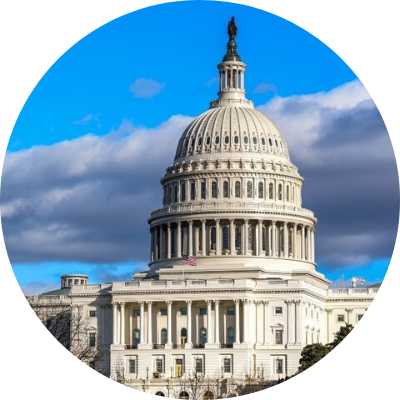
Like the rest of the country, attention in Washington and with AAPI advocates around the country are focused on addressing the impacts of COVID-19, from hate crimes to economic relief. Congress was out of D.C. for most the month, using special procedures to pass relief bills while socially distancing.

As a member of the National Council of Asian Pacific Americans (NCAPA), NAPABA is working with a national coalition of AAPI community organizations to ensure that AAPI communities get access to resources as part of the coronavirus relief package. This includes advocating for increased language access, documenting acts of bias, and organizing in language community resources. See these materials at the Coronavirus Resource Center.

On April 22, the President issued an executive order suspending certain types of immigrants from entering the country. NAPABA, working with its Immigration Committee, issued a statement expressing concern about the potential impacts of the order.

Many in the community are concerned about the rising acts of bias and hate against the AAPI community related to the coronavirus. NAPABA is working with the Department of Justice to share community resources and hold webinars with federal experts, like our recent webinar “Pandemic and Acts of Hate Against Asian Americans: From Past to Present.”

Congresswoman Grace Meng, Senator Kamala Harris, Senator Tammy Duckworth, and Senator Mazie Hirono are leading efforts on Capitol Hill to recognize the impact of coronavirus motivated anti-Asian hate. NAPABA is an organizational sponsor of the resolutions their offices introduced denouncing these racist incidents. Twenty-seven AAPI bar associations joined us in supporting the bill.


Name: Bonnie M. Youn

Job/Position: Talent Cultivator and Career Dream-Maker (well, Legal Recruiting Manager if you want to be formal) at The RMN Agency (Atlanta, GA)

Affiliation with NAPABA: Board Member of the Georgia Asian Pacific American Bar Association (GAPABA)

Social media handles:

Twitter:  https://twitter.com/BonnieYounRMN

LinkedIn: https://www.linkedin.com/in/bonnieyoun/

Facebook: https://www.facebook.com/bonnie.youn

Instagram: https://www.instagram.com/byoun2/

What is your favorite midnight snack?

OMG, so busted. But you can't ever go wrong with chicharrones or Ramen.

If you had four more hours in your day, what would you do with them?

In a non-COVID world, I would have said networking. However, during the #Quarantine: 2 more hours for sleep, 1 more hour for exercising, 1 more hour for decluttering

What are your favorite and least favorite household chores?

Favorite: Cooking, although I think I'm exhausting my repertoire. Least Favorite: Cleaning the cat litter?

What has been your most rewarding moment as a lawyer?

I've been an attorney for 20+ years now, so there have been a few. The most memorable was when I was practicing as an immigration attorney, helping a Nigerian family of 7 fight the mother's removal proceedings while their father was also simultaneously incarcerated for a petty misdemeanor.

Navigating the kids' unstable family situations was very challenging, but my husband and I resolved to rent a large van to take them all to visit their Mom, who was in a facility nearly 3 hours away from Atlanta. When we arrived, all of the children were able to visit with her only because I was an attorney who brought them inside for a client visit. Not a dry eye in the detention room. They were only able to "touch hands" through the glass window, and she passed me some drawings she had made for each child through the paper slot. Afterwards, my client shared tearfully that when she told the detention officer that her children were coming to visit, the officer said that was impossible, and against the family visitation rules. Her defiant reply: "You don't know my lawyer."

On the long way home, after a sad silence, the children started singing a native song in the van in perfect harmony. We took them to Chuck-E-Cheese for dinner, and they said it was the best meal they ever had. Through the private donations of friends on Facebook, we also were able to treat the kids to Six Flags, to help distract them from their terrible situation. I was ultimately able to secure my client's release after nearly 3 months, and I picked her up at the bus station. Their reunion is something I will never forget.

That memory, and shaking President Obama's hand in the Oval Office for being recognized as a White House Cesar Chavez Champion of Change in 2012 are the most rewarding moments of my legal life so far.

What advice do you, as an experienced lawyer, wish you could have given to yourself when you were a law student?

Life is the great leveler. Yes, grades are important, but they don't define you as an attorney. Breathe and focus on developing your craft while being kind to others. Concentrate on your soft skills, and remember to give back to those who come after you.

What is the most serious issue facing the profession today?

The legal profession's lack of diversity and inclusion still remains appalling in the 21st century. While we are taking strides and corporations are pushing and requiring law firms to meet diversity and inclusion metrics, the legal profession must analyze and take drastic steps to begin to more accurately reflect the face of justice.

Why are you a member of NAPABA?

NAPABA has meant so much to me over the past 25 years--beginning since I was President of the Boston University APALSA, through the decades I practiced as an immigration attorney, and now as a legal recruiter. The warmth, friendship, mentorship, and family reunions at the annual conference have been a guiding light to me. Because of NAPABA, I give back to the young lawyers and law students who come after us. I continue to serve on the Georgia APABA Board and constantly promote our bar as a "brand ambassador." The people I meet through NAPABA are some of the most inspiring heroes I know. We continue to blaze trails of professional excellence, and provide a powerful voice to advocate on behalf of our APA communities. 

Name one person who has had a profound effect on your life and tell us about them.

Dale Minami and the entire team who brought the coram nobis petition to overturn Fred Korematsu's conviction. When I read about and studied that case in law school, it made me incredibly proud and inspired to be an Asian American pursuing the legal profession. Because of NAPABA, I had the opportunity to meet Dale in person because we attended the dinners hosted by the Solo/Small Firm Committee. I was inspired to invite him as our Keynote Speaker to Georgia when we held the first Fred Korematsu Day in 2012 for Asian American communities at the Georgia Capitol. The event was derailed by a snowstorm and we had to postpone the program, but Dale came anyway and so we changed gears and he spoke at GAPABA's Lunar New Year Banquet. I then had the rare opportunity to videotape and interview him about his experience and the extraordinary efforts by the team to overturn the constitutionality of that unjust conviction. Two weeks later, when we were able to reschedule the event, I received a call that shocked me. It was Karen Korematsu herself who said she had heard about our situation, and "would it be OK if she came herself?"

What is your idea of perfect happiness?

Going on vacations planned by my husband after completing the exhausting planning and execution of a special event. Usually, this is after the GAPABA Gala, normally held in April or May. Unfortunately, we've had to postpone that with COVID-19 this year. So I'm living my semi-perfect happiness now--holed up with beloved Frank, with my two kitties Pancake and Waffles, and facetiming with my family (cat karaoke app rules!). Knowing that my family is safe and healthy is the most important thing.

If you could change one thing about yourself, what would it be?

Having the discipline to break a 50-minute 5K. I know no land-speed records will be broken, but that would be awesome.

Whom do you admire?

RBG for life. Malala for her miraculous survival and fight. My Mom & Dad for surviving the Korean War, and going on to thrive and raise their family in a new world.

 
 Thank Your For Being A Member

NAPABA meets you where you are and takes you to where you want to be. Whether you are in your first 10 years of practice or your 30th, a NAPABA Membership offers the resources and contacts you need to achieve your professional goals.

Sign In
National Asian Pacific American Bar Association

1612 K Street NW, Ste.300
Washington, DC 20006

Contact Us

© 2015 - 2026 National Asian Pacific American Bar Association   |   The NAPABA and the NAPABA logo are Registered in the U.S. Patent and Trademark Office